
Now Reading: Quantum Computing Startup Claims Major Milestone in Error Correction
-
01
Quantum Computing Startup Claims Major Milestone in Error Correction

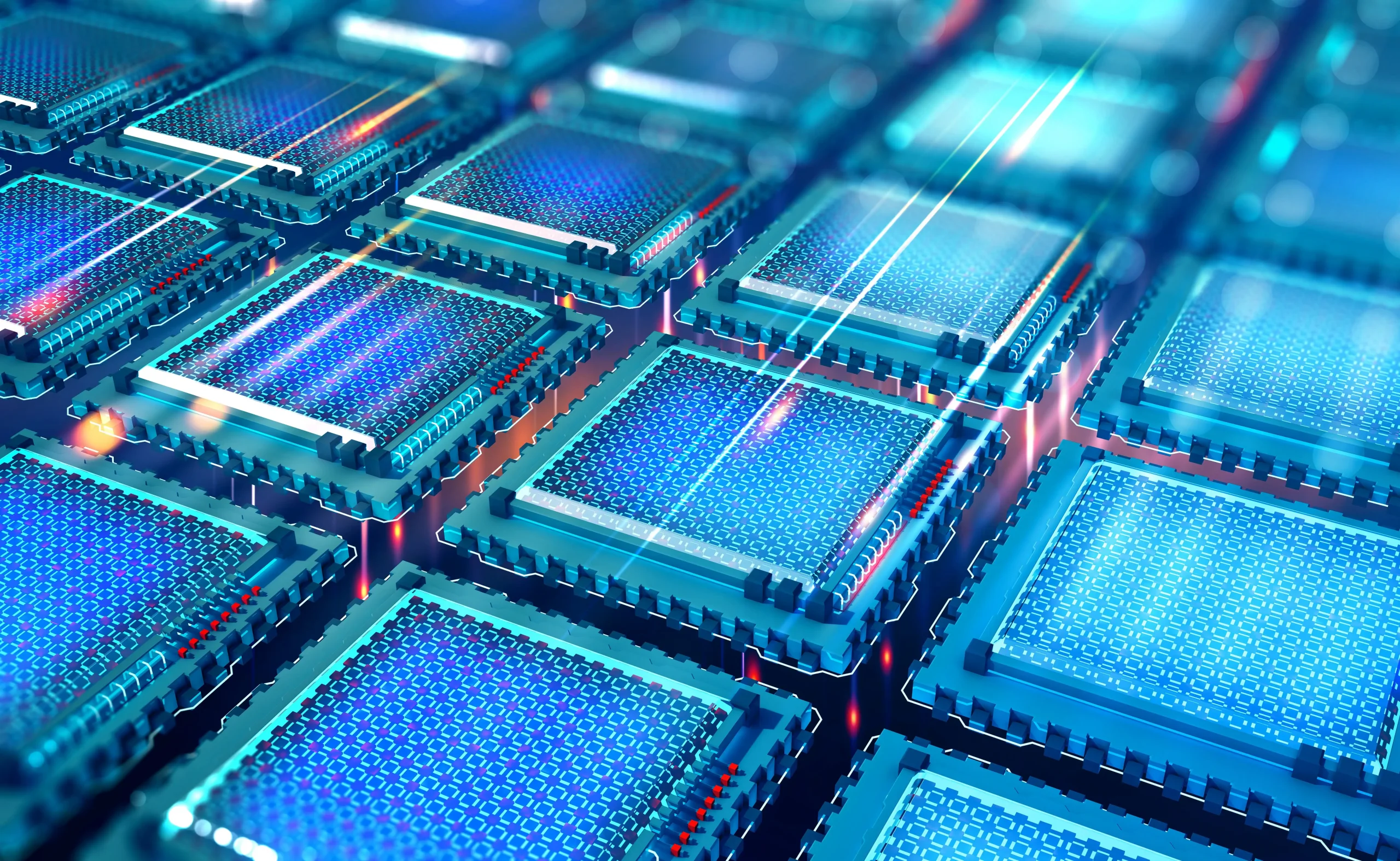
A major breakthrough has been announced in the rapidly evolving field of quantum computing. A leading startup has revealed that it has achieved a significant milestone in quantum error correction, a critical challenge that has long limited the scalability and reliability of quantum systems. This development could accelerate the timeline for practical quantum computers and unlock applications previously considered out of reach.
The Challenge of Quantum Error Correction
Quantum computers hold the promise of performing calculations far beyond the reach of classical machines, potentially transforming industries from cryptography to materials science. However, they face a fundamental problem: qubits, the basic units of quantum information, are highly fragile. They are extremely sensitive to environmental noise, thermal fluctuations, and even minor electromagnetic interference.
As a result, quantum errors accumulate quickly, and without robust error correction, qubits cannot reliably store or process information. Traditional error correction methods used in classical computing are insufficient for quantum systems, because observing a qubit directly collapses its quantum state. This paradox has been one of the biggest obstacles in building practical, large-scale quantum computers.
The Startup’s Breakthrough
The startup’s new system reportedly demonstrates fault-tolerant quantum error correction at unprecedented levels, allowing qubits to maintain their state for longer durations and perform computations with significantly fewer mistakes. Key aspects of this achievement include:
- Advanced Qubit Encoding: Using sophisticated encoding schemes, logical qubits are distributed across multiple physical qubits, allowing errors to be detected and corrected without collapsing the quantum state.
- Real-Time Error Detection: The system continuously monitors for deviations in qubit behavior and applies correction protocols in real time.
- Scalability Potential: The architecture is designed to expand efficiently, enabling more qubits to be added without exponential increases in error rates.
These innovations represent a critical step toward fault-tolerant quantum computing, where systems can perform complex calculations reliably over extended periods.
Implications for Quantum Computing and Industry
1. Accelerated Development of Quantum Applications
With improved error correction, quantum computers could soon tackle problems that are infeasible for classical systems, including:
- Advanced drug discovery and molecular simulations
- Optimization of large-scale supply chains
- Secure cryptographic systems resistant to classical attacks
2. Increased Investment and Collaboration
Success in error correction is likely to attract greater interest from investors, governments, and research institutions, as it signals tangible progress toward commercially viable quantum systems.
3. Bridging the Gap to Practical Quantum Advantage
Fault-tolerant systems could enable quantum advantage—where a quantum computer outperforms the best classical computers—not just in laboratory settings, but in real-world, high-impact tasks.
Challenges Ahead
Despite this milestone, significant hurdles remain:
- Scaling Beyond a Few Hundred Qubits: Current quantum systems are still far from the thousands or millions of qubits needed for general-purpose applications.
- Error Correction Overhead: Even advanced schemes require many physical qubits to encode a single logical qubit, posing challenges in hardware design and stability.
- Integration with Existing Quantum Algorithms: Error-corrected qubits must be compatible with complex algorithms to fully realize practical benefits.
Experts caution that while progress is promising, commercial-scale quantum computing may still be several years away. However, this milestone demonstrates that the technical barriers are being systematically addressed.
Looking Ahead
The startup’s achievement in error correction marks one of the most important steps in the evolution of quantum computing. By enabling more stable and reliable qubits, the path toward practical quantum systems becomes clearer. If these advancements continue at the current pace, we could soon witness a new era of computational power, capable of transforming industries, scientific research, and our understanding of complex systems.
This milestone underscores that quantum computing is no longer a theoretical pursuit but is steadily moving toward real-world impact.