
Now Reading: Meta Launches AI-Powered Virtual Workspace for Remote Collaboration
-
01
Meta Launches AI-Powered Virtual Workspace for Remote Collaboration

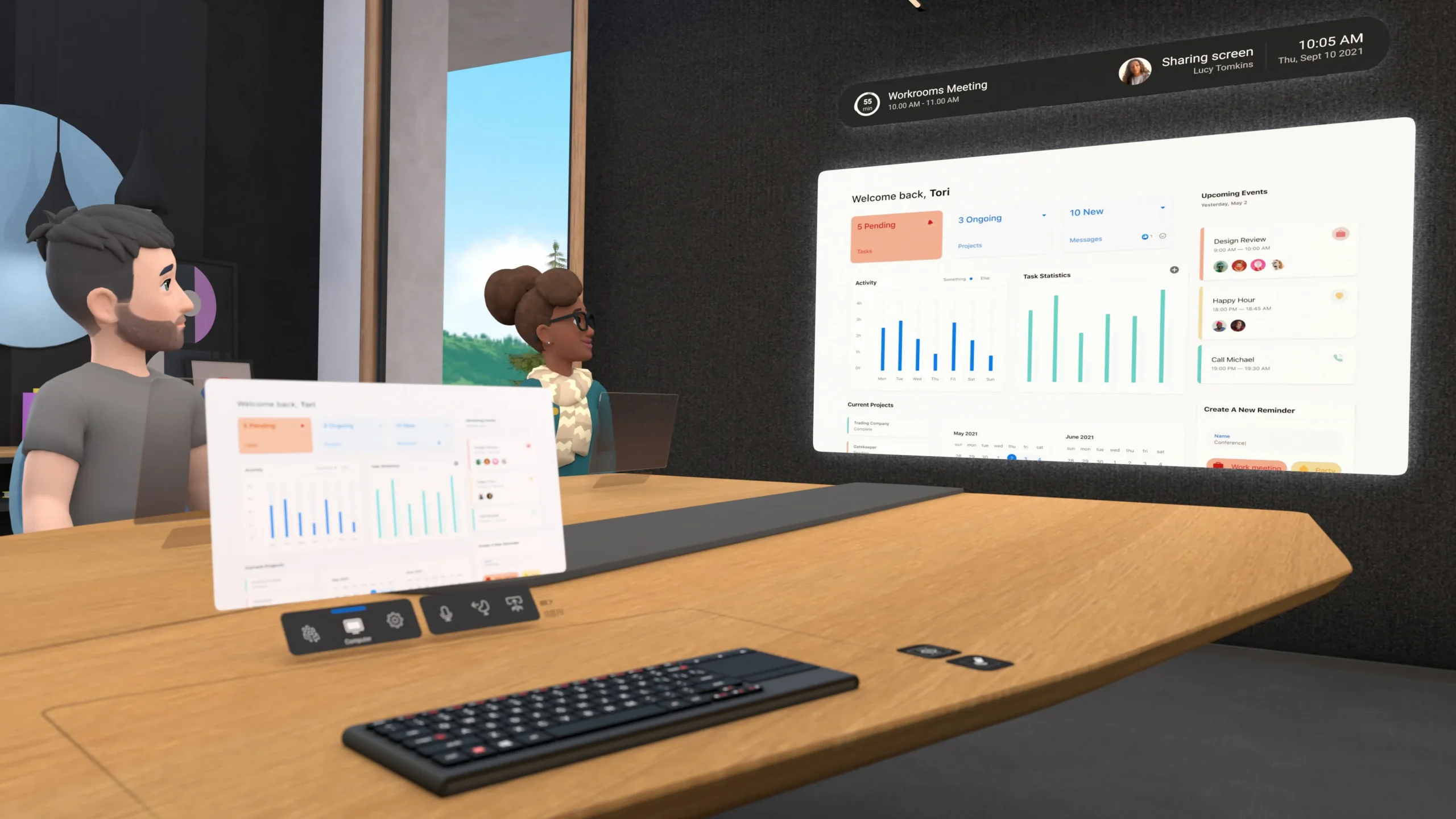
Meta has officially launched a next-generation AI-powered virtual workspace designed to transform remote collaboration. The new platform integrates immersive virtual environments, advanced AI assistance, and real-time productivity tools, offering teams a more interactive and efficient way to work together regardless of location.
Key Features of Meta’s Virtual Workspace
- Immersive 3D Collaboration
The platform allows users to enter fully immersive 3D virtual spaces, simulating physical offices or collaborative environments. Participants can move, interact with objects, and share presentations, creating a sense of presence that goes beyond traditional video conferencing. - AI-Enhanced Productivity Tools
Built-in AI features assist with a variety of tasks, including:
- Meeting Summaries: Automatically generate concise summaries and action items from discussions.
- Real-Time Translation: Supports multilingual teams by providing instant translation of speech and text.
- Smart Task Management: AI tracks tasks, deadlines, and dependencies, helping teams stay organized without manual effort.
- Virtual Whiteboards and 3D Asset Integration
Teams can brainstorm on interactive virtual whiteboards, manipulate 3D models, and visualize complex data in real-time. These features enhance creativity and facilitate better understanding of technical or design concepts. - Seamless Cross-Platform Integration
The workspace integrates with popular productivity and communication tools, allowing users to import documents, spreadsheets, and project plans directly into the virtual environment. It supports desktop, mobile, and VR/AR devices for flexible access.
Implications for Remote Work
Meta’s AI-powered workspace addresses several ongoing challenges in remote collaboration:
- Enhanced Engagement: Immersive environments encourage active participation and reduce the fatigue associated with traditional video calls.
- Improved Knowledge Sharing: AI-assisted documentation and searchable virtual environments make information easier to access and retain.
- Greater Efficiency: Automation of routine tasks, such as note-taking and scheduling, allows teams to focus on high-value work.
By combining AI with immersive technology, the platform blurs the line between physical and digital collaboration, fostering more natural interactions among distributed teams.
AI Innovations Behind the Platform
Meta’s workspace leverages advanced AI technologies to enhance collaboration:
- Natural Language Processing (NLP): Powers real-time transcription, summarization, and translation.
- Computer Vision: Recognizes gestures, objects, and spatial arrangements within the virtual environment.
- Predictive Assistance: Suggests relevant documents, resources, and next steps based on context and team activity.
These AI-driven features create a workspace that not only facilitates collaboration but actively supports decision-making and productivity.
Potential Impact on the Future of Work
- Reimagining Office Dynamics: Teams can collaborate in virtual offices that replicate in-person interactions, reducing the need for physical office space.
- Global Team Enablement: AI-powered translation and virtual presence enable seamless collaboration across geographies and time zones.
- Innovation Acceleration: Access to immersive tools and AI insights supports faster problem-solving and creative brainstorming.
Industry analysts suggest that platforms like Meta’s could redefine corporate workflows, particularly for sectors such as tech, design, engineering, and education, where visual collaboration is critical.
Challenges and Considerations
While promising, the adoption of virtual AI-powered workspaces faces challenges:
- Accessibility and Hardware Requirements: Fully immersive experiences may require VR or AR hardware that is not yet universally available.
- Privacy and Security: Sensitive business data in virtual environments must be protected against breaches or unauthorized access.
- User Adaptation: Teams may require training to adapt to new workflows and AI-assisted processes.
Careful planning and infrastructure support will be necessary to ensure that organizations maximize the platform’s potential.
Looking Ahead
Meta’s AI-powered virtual workspace represents a major leap forward in remote collaboration technology. By integrating immersive environments, AI productivity tools, and real-time communication, the platform offers a glimpse into the future of work where physical distance is no longer a barrier to innovation.
As adoption grows and the technology evolves, virtual workspaces could become the standard for distributed teams, enabling more efficient, engaging, and intelligent collaboration across industries.